


What is a Clay Bar?
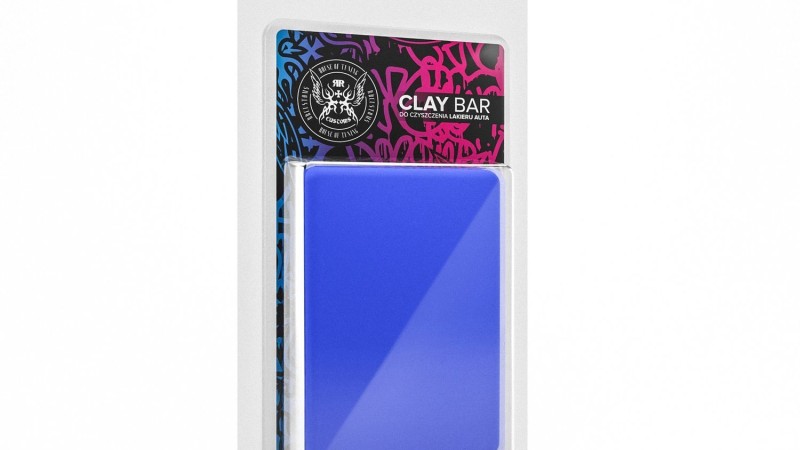
What is a Clay Bar?
Before we begin detailing the exterior of our car (polishing-waxing), one of the most important stages is to have the cleanest possible surface so that we can achieve the maximum possible performance from the products we will use. After the vehicle has been washed with the appropriate mild chemicals and shampoos, the clay bar is the next stage that should follow.
Characteristics:
- Removes harmful contaminants and bonded deposits
- Prepares the paintwork for polishing and waxing
A clay bar provides a method for removing harmful bonded contaminants from the painted surfaces of vehicles.
This ensures a longer lifespan for the paintwork, better adhesion of the final sealant, and even greater gloss from the applied waxes, sealants and ceramic coatings.
All types of paintwork are exposed to a wide range of chemical, industrial and environmental contaminants, such as tree sap, bird droppings, mineral deposits, acid rain and metallic deposits.
These contaminants cannot be removed by simple washing or by polishing the paintwork alone.
For the safe removal of bonded contaminants, it is necessary to use a clay bar specifically designed to remove them from the paint finish.
If left untreated, harmful contaminants can create defects on the surface of the paintwork.
Additionally, every vehicle being prepared for the application of wax or synthetic sealant should be cleaned with a clay bar so that the application surface is exceptionally clean and smooth.
This ensures maximum bonding of the wax to the surface, as well as the maximum protection duration of a wax or sealant.
Clay is easily moulded and makes the paint surface smooth and soft.
All clay bars available on the market require the use of a lubricant during application.
They are available on the market in three different types: soft, medium and hard, and we use them depending on the situation we need to deal with.
For example, on a vehicle that has already been polished and is in good condition, we would use a soft clay bar, while on a 10-year-old vehicle that has never been detailed, we would use a hard clay bar. However, if the vehicle has a soft clear coat, we would not use a hard clay bar.
After spraying the appropriate lubricant for the clay bar we are using, we work on small sections until the surface is completely free of foreign contaminants. A clay bar DOES NOT remove clear coat and does not damage it.
In some cases, if there are heavy bonded contaminants and we continue working the surface, a slight haziness known as marring may occur, which can be removed using a fine polishing compound.